
After the 1962 War with China, there was a demand to forge greater defence cooperation between India and the West. One such voice was that of Sudhir Ghosh, a distinguished MP, to tie up strategic cooperation with the USA immediately after the Chinese attack on India, recalls Rup Narayan Das.

Kicking off his four-day visit, General Suhag met General Li Zuocheng, the head of China's ground forces which have undergone major restructuring in the last three years.

The Ministry of External Affairs (MEA) has announced that India and China have reached an understanding to resume the Kailash Mansarovar Yatra in 2025. While an understanding has been reached, the modalities of the pilgrimage are yet to be firmed up. The Yatra has been suspended since 2020 due to the COVID-19 outbreak and non-renewal of Yatra arrangements by the Chinese side.
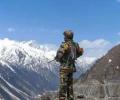
Multiple rounds of talks have failed to yield any significant result in defusing border tensions. The last round of Corps Commander-level talks between both countries were held on November 6, 2020 in Chushul in Eastern Ladakh.

The last meeting between the two sides at the Corps Commander level was held in December last year.

The Jaishankar-Wang talks came amid the dragging border row in eastern Ladakh that entered its fifth year in May.
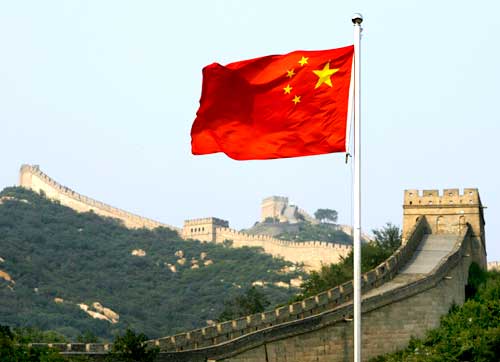
Bhutan firmly abides by the one-China principle meaning Taiwan and Tibet are part of China and stands ready to work with China for an early settlement of the boundary issue and advance the political process of establishing diplomatic relations, it said.

The two sides held diplomatic talks through video conference on the border standoff in midst of fresh details emerging that China has strengthened its position in several areas in eastern Ladakh including Galwan Valley where a violent clash on June 15 left 20 Indian soldiers dead.

In the meeting, Doval conveyed to Wang that peace and tranquillity in border areas and respect for the Line of Actual Control are essential for return of normalcy in bilateral ties, according to the ministry of external affairs.

India and China on Friday are holding another round of high-level military dialogue to resolve the 22-month-long standoff in some friction points in eastern Ladakh, two months after the last round of such talks failed to yield any significant outcome.

The Indian side is expected to seek disengagement as soon as possible in the remaining friction points besides pressing for resolution of issues in Depsang Bulge and Demchok.
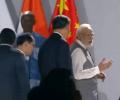
Prime Minister Narendra Modi conveyed to Chinese President Xi Jinping India's concerns on the "unresolved" issues along Line of Actual Control (LAC) in eastern Ladakh during a conversation on the sidelines of the BRICS summit, Foreign Secretary Vinay Mohan Kwatra said on Thursday.

Prime Minister Modi and President Xi held the conversation on Wednesday on the sidelines of the BRICS (Brazil, Russia, India, China, South Africa) summit in Johannesburg.
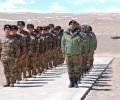
Chinese foreign ministry spokesperson Mao Ning told the media in Beijing on Monday that the two sides held an in-depth exchange of views on expediting the resolution of relevant issues.
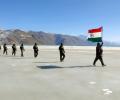
India has told China not to "shift goalposts" and "confuse" managing the border affairs and restoring peace at the frontiers with the larger issue of the resolution of the boundary question, which is dealt with by different designated mechanisms.
There was no official word on the outcome of the talks.
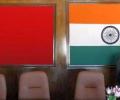
The sources said the focus of the talks was to take forward the disengagement process in friction points like Hot Springs, Gogra and Depsang in eastern Ladakh.
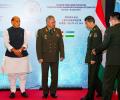
Singh conveyed to Li that India wants to improve relations with China but it can happen only after peace and tranquillity are restored at the border, the sources said.

India is set to press for early disengagement of troops from the remaining friction points in eastern Ladakh at a fresh round of high-level military talks with China on August 14, people familiar with the matter said on Saturday.

As of now, in the case of China's border dispute with India, China is not likely to lose much if it does not resolve the dispute. In fact, the unresolved border dispute has much to offer to China, says Sana Hashmi.

'With continued focus on votes, upcoming by-polls and purchasing politicians, the political hierarchy has little time for national defence.' 'They would do well to heed a veteran scholar, who says, "There will be war with China in the next few years. The next full scale war will have the involvement of Pakistan and terror elements, insurgents and intelligence assets operating inside India",' warns Lieutenant General Prakash Katoch (retd).
"On the border issue, China always maintains that we should follow through on treaties and agreements we signed and we jointly uphold peace and tranquility at the border region," Foreign Ministry spokesman Wang Wenbin said while responding to Jaishankar's remarks.
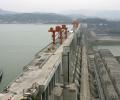
China has defended its plan to build the world's largest dam on the Brahmaputra River in Tibet, assuring that the project will not affect riparian states and safety issues have been addressed through decades of studies. The dam, estimated to cost USD 137 billion, has raised concerns in India and Bangladesh, but Chinese authorities maintain that the project has been thoroughly studied and safeguards are in place. The dam is part of China's efforts to develop clean energy and respond to climate change.

Relations between India and China have been in an 'abnormal state' since the 2020 Galwan clash and it is a 'possibly longer than medium-term issue', External Affairs Minister S Jaishankar said in New York.

Ahead of the India-China border talks, an official Chinese daily today said both countries need to learn a lesson from the 1962 war that even though Beijing may like peace, it will firmly defend 'its' land.
The statement of Commander of US Indo-Pacific Command Admiral John Aquilino on Wednesday came ahead of the 15th round of high-level military talks between India and China on March 11.
In a written reply to a question in Lok Sabha, Minister of State for External Affairs V Muraleedharan gave a brief account of the four-month-long standoff and said the Chinese side attempted to transgress the Line of Actual in several areas of the western sector since mid-May.
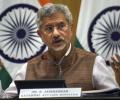
Jaishankar, speaking at a virtual event hosted by the Asia Society, said that India has built the relationship with China over the course of last 30 years "and a basis for building that relationship has been peace and tranquillity along the Line of Actual Control".
The sources said both sides held extensive deliberations on modalities for disengagement of troops from all the friction points in eastern Ladakh at the talks.
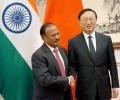
The decision was taken during the annual 19th round of boundary talks in Beijing between National Security Advisor Ajit Doval and his Chinese counterpart Yang Jiechi.
'After more than 20 years of understanding, nothing much seems to have been achieved. What the two countries have been trying to do is to manage the recurrence of border incursions. The two sides must address the disease, and not the symptom of the disease,' says Rup Narayan Das.
....a long-term boundary agreement is reached between the two countries.

He said both sides reaffirmed to sincerely work towards complete disengagement of the troops along the LAC.

India and China on Tuesday discussed the recent spate of incursions and ways to maintain peace and tranquility along the Line of Actual Control in the border areas.

In his conversation with Prime Minister Narendra Modi, President Xi Jinping stressed that improving China-India relations serves common interests and is conducive to peace and stability of the region and the world.
The two sides agreed that the next round of military dialogue should be held at an early date.

'Given China's past behaviour and their territorial claims, should we be sceptical regarding China's willingness to adhere to these agreements fully? The answer is yes.' 'As Ronald Reagan famously said in the context of the SALT talks, 'Trust, but verify!' India should also do the same.' 'This has already begun with foot patrolling, drones, satellite imagery and so on. India's military deployment did mirror China's and will continue to do so in the future.'
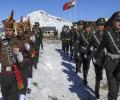
Foreign ministry spokesman Zhao Lijian, during a media briefing in Beijing, said that China's position on the border related issues is clear and consistent. "We have been following the important consensus reached by the two leaders and strictly observing the agreements between the two countries," he said, apparently referring to the directions of Chinese President Xi Jinping and Prime Minister Narendra Modi after their two informal summits, asking the militaries of the two countries to take more confidence building measures to maintain peace and tranquillity along the borders.
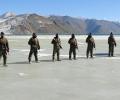
A day after the nearly 12-and-half-hour talks, the two sides, in a joint statement on Monday, reaffirmed that the resolution of the pending issues would help in the restoration of peace and tranquility along the Line of Actual Control (LAC) in the region and enable progress in bilateral relations.

It is learnt that the Indian delegation insisted on a time-bound implementation of the agreement finalised during the extensive talks between External Affairs Minister S Jaishankar and his Chinese counterpart Wang Yi in Moscow on September 10 on the sidelines of a Shanghai Cooperation Organisation(SCO) meet.
